

Tent Camping 101
A Beginner’s Guide to Safe and Fun Camping Experiences at Texas State Parks
OUR GOAL
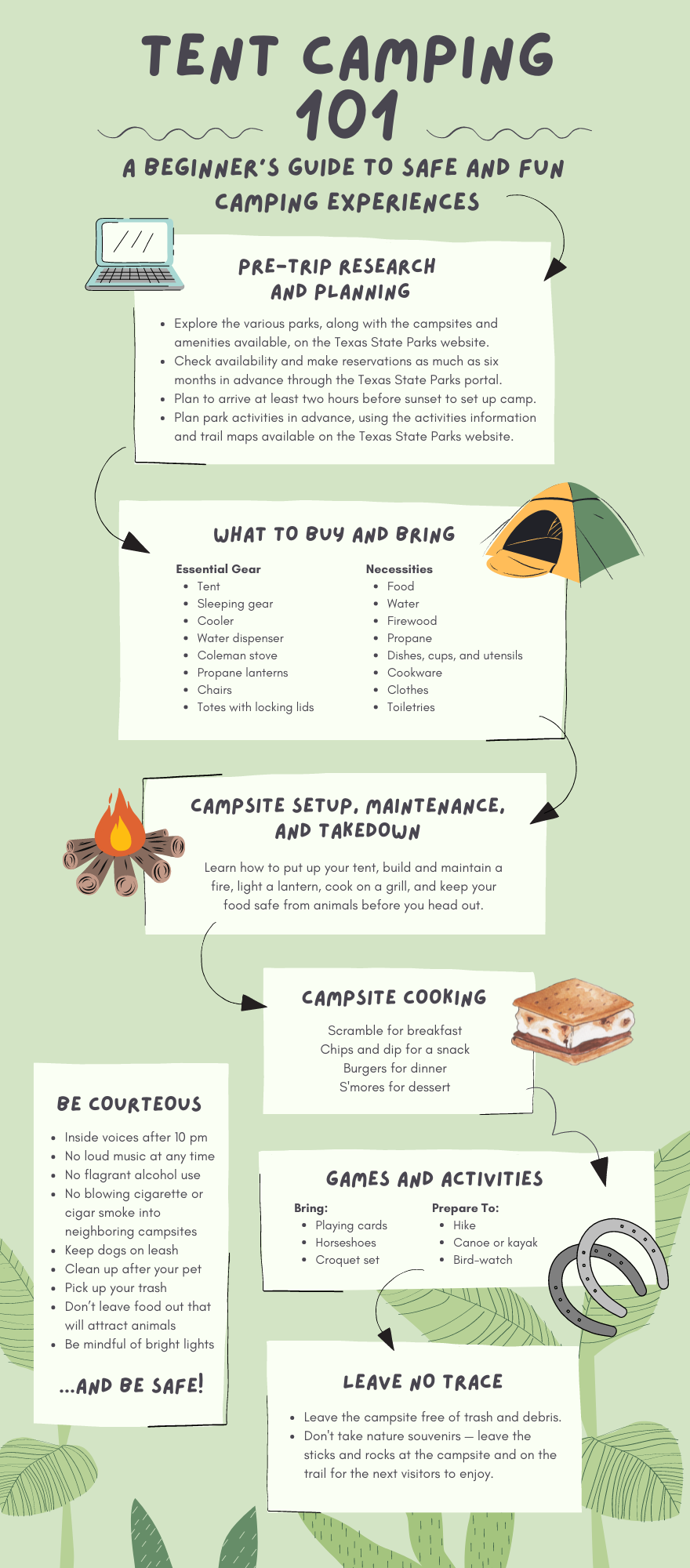
The goal of this page is to teach novice campers how to prepare for an initial tent camping experience, handle common situations, and stay safe outdoors.
Disclaimer: The information gathered here is based on our own camping experiences. Every camper and camping trip has different goals and therefore necessary supplies. Use your own judgment about what will work best for your specific circumstances.
Pre-Trip Research and Planning
TEXAS STATE PARK RESEARCH
Explore different parks, campsite options, and amenities.
CAMPSITE RESERVATIONS
Check availability and reserve a specific campsite.
PLANNING PARK ACTIVITIES
Discover all the things to do at each park.
CALCULATING THE IDEAL ARRIVAL TIME
Packing time + prep time + loading time + drive time + stops for food and gas to arrive with ≥2 hours to set up camp before sunset
Note: Check-in for most campsites is after 2 pm, and it’s best to arrive at least 2 hours before sunset to have enough time to properly set up camp.
Equipment and Supplies Needed
ESSENTIAL CAMPING GEAR
RECOMMENDED LUXURY ITEMS
SUPPLIES
- Food = groceries for each meal per person
- Check out our recipes.
- Water = 5 gallons every 2 days per 2 people
- Bring a water dispenser with a spigot or a water tainer.
- Wood = # days of the trip x 2 bundles per day
- Bring dense wood like oak or cedar for fires and apple or mesquite for cooking.
- Add extra if burning wood during the day for warmth.
- Propane = 1 for the grill + 1 for each propane lantern + 1 extra tank
- Bring small 1-lb propane tanks.
How to pack up your supplies

Campsite Setup and Maintenance
How to set up a tent

How to build, maintain, and extinguish a fire

How to set up a Coleman grill with a propane tank

How to securely store food

How to light a propane lantern

Cooking at the Campsite
SAMPLE MEAL PLANNING
- Breakfast
- Sausage and egg scramble with asparagus
- Coffee via a kettle to boil water and a French press
- Lunch (optional)
- Havarti cheese slices, salami slices, and water crackers
- Snacks
- Dinner
- Hamburgers and chips
- Dessert
- S’mores
Cooking over a campfire

Campsite Games


CARD GAMES
Crazy Eights
The objective is to be the first player to get rid of all the cards in your hand.
Go Fish
The objective is to win the most “books” of cards; books are any four of a kind.
War
The objective is to be the first player to win all 52 cards.


LAWN GAMES
Horseshoes
The objective is to throw the horseshoe around the stake.
Cornhole
The objective is to toss the bean bag into the hole.
Croquet
The objective is to be the first to hit the balls through the course in the right sequence in each direction and then hit the center peg.
Park Activities
BIRD-WATCHING
What to Bring
- Binoculars
HIKING
What to Bring
- Backpack
- Water bottle(s)
- Kind bars (bars that will not melt or be harmed by extreme weather)
- Hat (preferably with a large brim)
- Sunscreen
- Bug spray (to prevent ticks)
- Portable first-aid kit
- Appropriate clothing (e.g., sun, wind, rain, and cold protection)
CANOEING/KAYAKING
What to Bring
- All of the above, plus a waterproof bag for electronics and other essentials that should not get wet
Learn the Basics of How to Kayak
REMINDER
Be sure to plan hiking, canoeing, and kayaking excursions that are consistent with the group’s physical abilities and skill level.
Campsite and Park Safety
FIRST-AID SUPPLIES
- Band-Aids
- Neosporin
- Anti-itch cream (for bug bites)
- Burn cream
- Tweezers
- Tick removal kit
- Mosquito repellent
- Bug spray
WHAT YOU NEED TO KNOW
Call the park directly before your trip to find out about:
- WiFi availability;
- Common wildlife to expect;
- Any special park regulations, warnings, and important notices like trail closures;
- Whether a burn ban is in effect; and
- Any local emergency services available.
Common Courtesy at the Campsite
CAMPSITE COURTESY RULES
- Use inside voices after 10 pm.
- No loud music at any time.
- No flagrant alcohol use.
- No blowing cigarette or cigar smoke into neighboring campsites.
- Keep dogs on leash.
- Clean up after your pet.
- Pick up your trash.
- Don’t leave food out that will attract animals.
- Be mindful of bright lights.
LEAVE NO TRACE
- Leave the campsite as you found it.

Post-Trip Activities
Be sure to carefully care for your camping equipment by:
- Loosely folding wet or muddy equipment, such as tents, for travel back home rather than repacking it in its carrying case;
- Cleaning or washing the equipment within a couple days of each trip;
- Fully drying all equipment, especially the tent; and
- Properly storing the equipment according to the manufacturing instructions (e.g., store down sleeping bags in a loose, uncompressed bag).
Tents are susceptible to permanent damage if moisture is locked in during transport, and the tent waterproofing can quickly degrade if you pack the tent before it is fully dry. Moreover, following these tips can help prevent mold, protect down feathers over time, keep equipment from getting lost, and improve the overall longevity of the equipment. Plus, it makes it easier to grab it and go on your next adventure!
Handouts
Frequently Asked Questions
We hope you enjoy the material on our website and will come back to explore it at your own pace. We’ll continue adding tips and tricks as we gather more information and feedback from visitors like you.
What Texas State Parks do you recommend?
Each park has its unique qualities. If you’re looking to go completely off-grid, we recommend Colorado Bend State Park. If you’re looking for tall, lush trees, check out Daingerfield State Park. If you’re looking for a great night sky, look into Davis Mountains State Park. If you want a great park to visit in the winter, we love Cooper Lake State Park.
Are there any Texas State Parks that you don’t recommend?
Tyler State Park has a raccoon problem because it seems that too many people have been feeding them. We had trouble even cooking meals without the raccoons aggressively begging for food in large groups and trying to get into our supplies. While the park was beautiful, the raccoons were too great a nuisance to enjoy our meals and therefore our overall trip. Cedar Hill State Park is another park that we are not particularly fond of for tent camping, as the sites are all full hookup, which makes the experience noisier and less relaxing. We do enjoy this park for hiking at times.
How far in advance do I need to plan my trip?
The Texas State Parks’ reservation portal opens up dates for campsites 5 months in advance. If you’re planning a trip to a popular park, like all the parks in the Hill Country in Texas, you’ll need to book your campsite as early as possible. For example, Colorado Bend State Park is one of the nicest parks in the state but is nearly always booked. It’s a good idea to have other parks in mind in case the one you want has no availability for your trip dates. For more information, see the Texas State Parks’ reservation FAQs.
Can I plan a last-minute camping trip?
Yes, you can search the Texas State Parks website for camping that is available this weekend. If we find that we have an unexpected weekend free to go camping, we’ll pick a campsite within an hour’s drive, plan some quick and easy meals, throw our gear in the back of the car, and head out late Friday afternoon. There’s nothing like relaxing in nature to recuperate from a difficult work week.
Do I need a park pass?
If you’re planning to take more than one trip in a year, we highly recommend buying a Texas State Parks Pass. Passes provide discounts on campsites, food, merchandise, and park activities like canoeing and kayaking. They’re also great if you take day trips to go hiking, as a pass gets you into most state parks for free.
How can I cater my trip to the park I’ve chosen?
Research is key before embarking on any camping trip. Check out the Texas State Parks website for the park you intend to visit and read all specific park information and activity options to ensure you’re appropriately coordinating your trip. Look for “Park Alerts” at the top of the page. Always call the park a couple days before your trip to find out whether there are any last-minute considerations that you need to take into account, such as burn bans, trail closures, construction, or animal warnings.
What season is best for camping?
You can camp during any season. It all depends on what kind of experience you want. Spring and fall are the most popular times of the year in Texas. Be sure to plan ahead and reserve your campsite as soon as you know the dates of your trip. The best parks fill up quickly when good weather is expected. If you’re looking for some peace and quiet and have the right gear to stay warm, we recommend camping during the winter when you can build a fire and drink hot cocoa under the stars.
What wildlife can I expect to encounter?
You can count on seeing raccoons, squirrels, and spiders on any camping trip. Armadillos and deer are also commonly seen in many Texas State Parks. Javelinas are common in Davis Mountains State Park, and alligators are common at Caddo Lake State Park. Black bears can be seen in the Big Bend area, the Hill Country, the Panhandle, and Northeast Texas.
Are there any other factors that I need to consider in trip planning?
Hunting is another consideration. If you don’t want to be woken up at 6 am by gunfire, then you may want to plan your trips to avoid popular hunting seasons.
What supplies do I need to purchase for a successful camping trip?
We’ve put together a list for just this reason. The packing list has the basic supplies that you’ll need for a 2- to 3-day trip. Be sure to bring extra supplies for each day that you add to your stay. The food list has some starting items but also leaves room for you to include your own recipes.
Do I need to spend a lot of money on high-end camping gear?
No, the most expensive equipment is not always necessary. There are great options at various price points, especially if you’re planning to go camping in the fall or spring. For example, a less expensive tent like the Coleman Sundome will work great if you’re camping in good weather. It is important, however, to make sure you have the right tent for more extreme circumstances like high winds, heavy rain, or extreme cold. Camping in these circumstances may warrant investing in more durable and specialized equipment. We also recommend investing in a high-quality sleeping pad with a high R-value if you’re planning to camp in the winter. Having that insulation between you and the ground is important in staying safe and warm.
Should I purchase a sleeping bag or a sleeping quilt?
When we first started out, we thought that we needed high-quality sleeping bags. The more we camp, the more we recommend buying a sleeping quilt instead. Unless you’re camping in extremely cold weather, sleeping quilts work better because they are much more versatile. With a good quilt, you can bundle up when you’re cold but still have airflow if you get hot.
Should I use ice or ice packs to keep my food cold in a cooler?
It depends on the climate and your personal preference. Ice will keep the contents of the cooler colder, but ice packs keep the food from getting wet. Ice may work better in hotter temperatures, but since it will melt, it may need to be replaced in extreme heat. It’s important to ensure you have a cooler that can withstand the temperatures you’ll be camping in or that you’ll have access to buy more ice at the campsite or at a nearby store.
How will I reference the website resources if I don’t have Internet access at the campsite?
We recommend printing a copy of any resource you think you’ll need or saving a digital version to your phone. That way, you’ll have access to these resources offline.
You’ve listed some common courtesy rules on the website. Are there any others not currently listed I should be aware of?
We’ve tried to include important tips that apply to all campsites, but some places have extra rules. Make sure you’re doing your own research. You can learn more about some park rules at the Texas Parks and Wildlife website.
Are there any safety measures I should be aware of before embarking on a camping trip?
Each park you visit is a little different and will have different concerns based on the climate, terrain, and common wildlife. We’ve collected some handy tips to help you out, but you can also refer to the Texas Parks and Wildlife website. Always ask park rangers when you check in what to expect as far as wildlife and other things to watch out for.
Do you have any more recipes that we can use on our next camping trip?
As we perfect our own camping recipes, we’ll share them with you via our recipe blog. Sign up at the bottom of the page to see new posts!
How can we get updates on your camping adventures and notifications about additions to the website?
We’re hoping to start a newsletter that will include items such as our own camping adventures and website expansion. We’ll include a sign-up form when we’re ready to roll it out.
Website Feedback
Thank you for visiting the Campfire and Wine website. We would love your feedback on how to better meet your needs and improve your camping experiences.